Medline Wheelchair Comparison Guide
Determine the best fit for your wheelchair in six easy steps
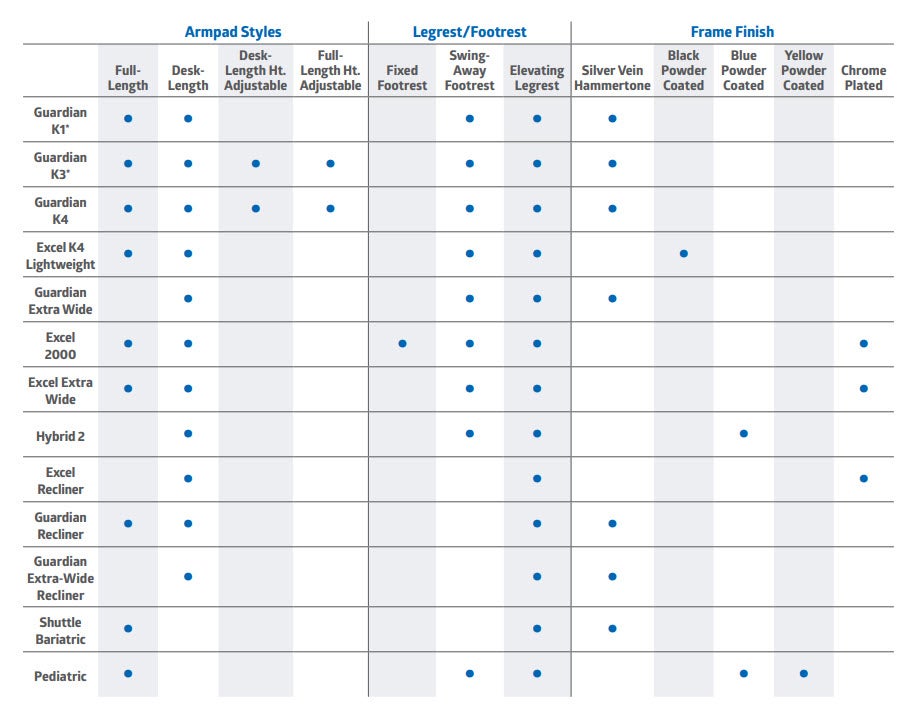
1. Determine Arm Type and Height
- Full-length arm: Gives support to pivot transfers when the patient pushes off to stand.
- Desk-length arm: Makes it easy to move around tables and desks.
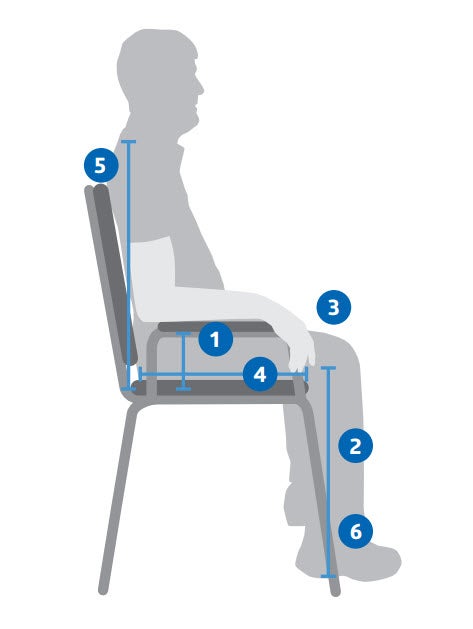
- Height: Measure from the elbow to the seat of the chair while holding arms up with elbows bent at a 90-degree angle.
Use adjustable arms when possible.
2. Determine Footrest Style
- Elevated leg rest: Raises legs
- Articulation leg rest: Extends longer for taller patients.
- Length: Measure from back of the knee to the heel of the foot.
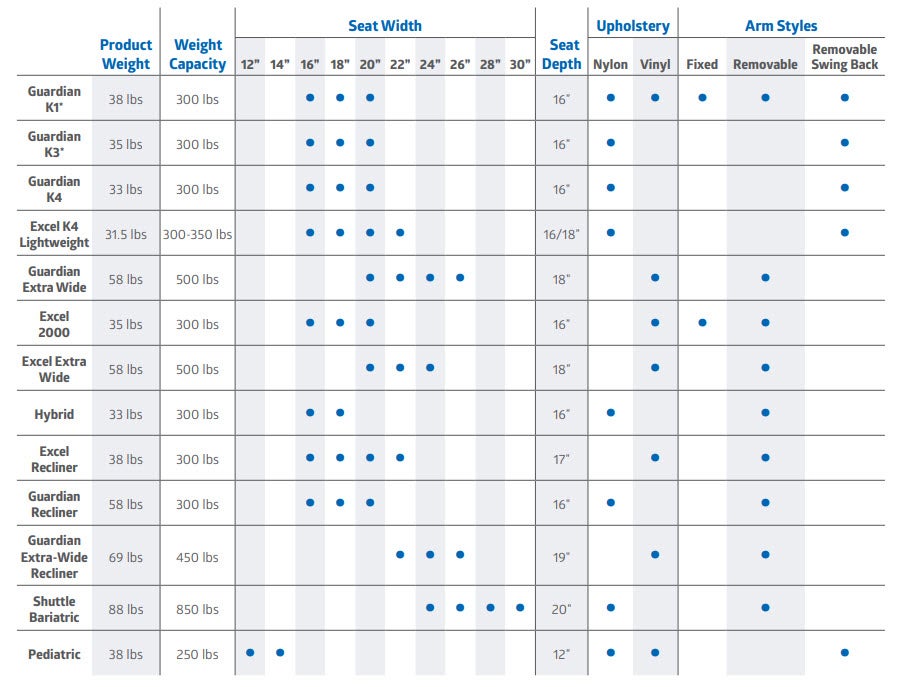
3. Determine Wheelchair Weight and Weight Limit
- Weight Cap.: Choose wheelchair weight based on the patient’s weight.
- Upper body strength: Choose lighter wheelchairs for weaker patients.
4. Determine Seat Size
- Seat width: Measure from hip to hip in a straight line and then add two inches.
- Seat depth: Measure from the back of the hip to the back of the knee while seated and then subtract one inch
5. Determine Back Height
- Standard back height: Measure from collarbone to the seat while seated.
- Taller back height: Require additional upper trunk support to be installed.
6. Determine Floor to Seat Height
- Movement: Check if the patient uses feet to propel or move.
- Height: Measure the distance between the back of the knee and the heel.